

Auto Drill: Galaxy review
 Analysis by GetAllApps
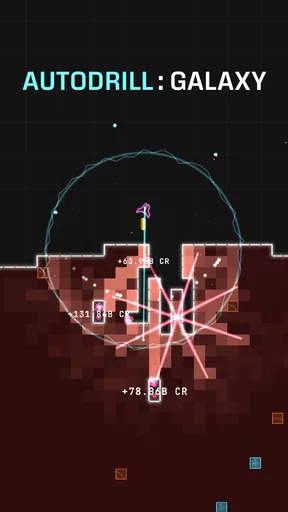
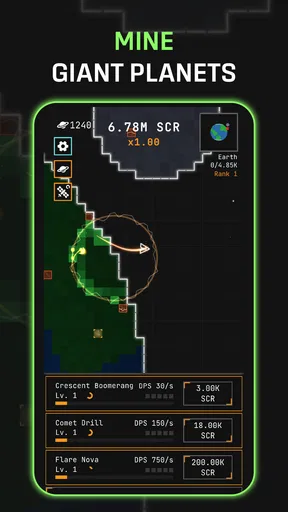
Some strategy games ask me to plan a long campaign; Auto Drill: Galaxy is better suited to a quick break built around steady progress. Its premise is easy to grasp: work through planets one block at a time, open up weapons, and combine skills as you push toward longer runs. I like that this gives a short session a clear purpose without demanding that I learn a complicated rulebook first.
The important question is whether you enjoy gradual, repeatable advancement more than direct tactical control. This is a strategy game with an incremental feel, rather than the sort of experience where every move depends on positioning a squad or carefully managing a map. If that distinction sounds appealing, it may be a satisfying pocket game. If you want a deep tactical puzzle, I would look elsewhere.
What kind of strategy suits your breaks?
I would judge this game by three things: whether its repeated drilling stays satisfying, whether unlocking and combining abilities gives you decisions worth making, and whether you are comfortable with progress that appears designed to continue over time. The central activity is deliberately focused. You are not being asked to juggle a sprawling base, a roster of characters, or a large collection of missions; the draw is watching a planetary obstacle give way as your toolkit develops.
That narrow focus is useful in everyday life. I can imagine opening it while waiting for a bus or taking a short lunch break, making a little progress, then putting it down without needing to remember a complex tactical situation. The block-by-block structure gives the session a visible endpoint, while the promise of further unlocks gives a reason to return. It is a better fit for spare moments than for someone seeking a long, uninterrupted strategy session.
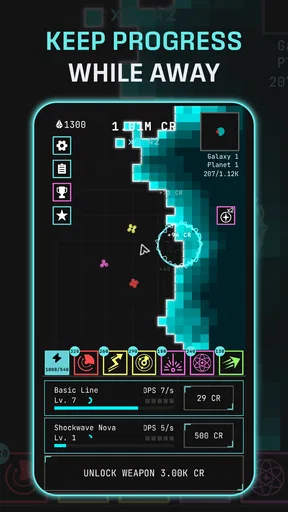
The game is free to download, with optional in-app purchases priced from $1.99 to $99.99 per item. That wide range makes it sensible to begin without paying and decide whether the normal pace works for you. I would not treat a purchase as a prerequisite: first see whether the basic loop remains enjoyable after the novelty of the opening progress fades. Spending is most defensible when it addresses a specific frustration you have actually encountered, not just because a more expensive option is visible.
Its audience rating is Everyone, which makes the presentation broadly approachable, and it has a 4.3 average from around 4,200 ratings. The game is published by LAVA LABS OYUN YAZILIM VE PAZARLAMA ANONİM ŞİRKETİ. Those details help set expectations, but they do not tell me whether the pace or repetition will suit a particular player; that comes down to what you enjoy doing moment to moment.
Progress feels best when you make it your own
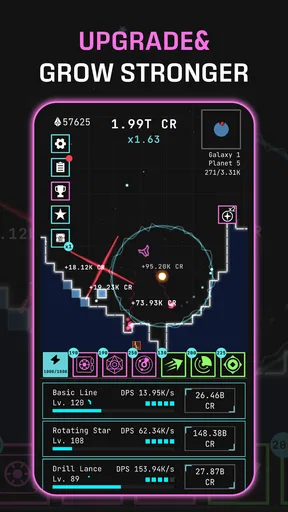
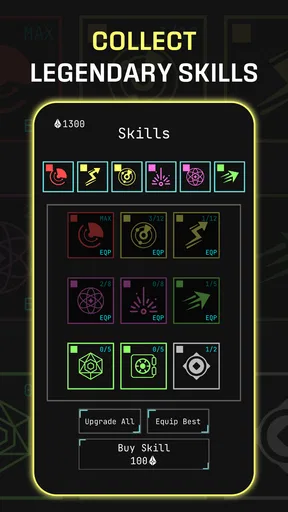
The most useful way to approach a game centered on drilling and upgrades is to treat each return as a small experiment. When a new weapon or skill becomes available, try it in the next stretch rather than assuming the first option that seems strong will remain best. Fusing skills implies that choices can shape a run, so comparing combinations is more rewarding than tapping through every upgrade without noticing what changes.
A practical habit is to pay attention to what slows you down. If a planet’s blocks are taking longer to clear, make a mental note of which weapon or ability combination helped afterward. This does not require keeping a spreadsheet; simply noticing whether a change made the next attempt feel smoother can make the progression more engaging. It also helps separate a genuinely useful upgrade from one that is merely new.
There is a trade-off here: repeated progress can feel calming when you want a low-pressure activity, but it can become monotonous if you need every session to introduce a new mechanic. The game’s promise of pushing toward an endless run makes persistence part of its appeal. I would enjoy that as a personal challenge, not as a reason to expect every attempt to feel dramatically different.
Where this game has an advantage
Compared with map-based strategy games, Auto Drill: Galaxy asks for less planning overhead. You can focus on clearing obstacles and tuning your developing capabilities instead of studying terrain or coordinating several units. That makes it easier to pick up in brief bursts, especially if you find conventional strategy games too demanding when you only have a few minutes.
It also occupies a useful middle ground between a purely passive idle game and a more involved strategy title. The emphasis on weapons and fused skills gives you something to consider, while the central drilling action keeps the goal obvious. For me, that combination works best when I want a little agency without turning a break into a study session. It is not the same kind of strategic depth as planning a campaign, but it offers a lighter way to think about progression.
One non-obvious tip is to avoid judging a build from a single moment. A combination may feel exciting when unlocked yet prove less useful over a longer stretch of blocks. Give it enough time to show whether it actually improves your progress, then switch if it does not. This keeps experimentation purposeful and helps prevent the game’s collection of unlocks from becoming a checklist you rush through without learning what suits you.
Another useful approach is to set a natural stopping point before you begin. For example, decide that you will play until you finish a planet or test one new skill pairing, then stop. A game built around continued progress can make “one more run” tempting, and a simple endpoint preserves its value as a short-break option. That routine is especially helpful if you prefer games that fit around other activities rather than take over the evening.
When another kind of game is a better fit
If your favorite strategy games are about anticipating an opponent, defending a base, or making choices that radically alter a campaign, this may feel too focused on incremental clearing. A turn-based tactics game is a stronger choice when you want every move to carry a distinct consequence. A tower-defense game may fit better if you enjoy preparing a layout and then seeing how it holds up. Auto Drill: Galaxy is more appealing when you want advancement to remain the main thread.
It may also be the wrong choice if repetition quickly wears you down. The core loop is intentionally easy to understand, but that same clarity means the experience leans on the satisfaction of upgrades and continued progress. Players who need frequent changes of setting or a substantial story may find that a more varied adventure game holds their attention longer.
For a fair comparison, I would ask what I want from the next ten minutes. If I want an active puzzle with a clear solution, I would choose a puzzle game. If I want to compete directly with another person, I would choose a multiplayer strategy option. If I want to make modest progress while listening to something else or waiting around, this game’s compact focus makes more sense. The best alternative depends less on which game is objectively stronger and more on whether you want tactical decisions, competition, or a steady upgrade loop.
There is also a distinction between a game that is easy to start and one that stays interesting indefinitely. The initial idea here is immediately legible, but long-term enjoyment depends on how much satisfaction you get from trying combinations and extending a run. I would recommend sampling the free version before spending money, particularly if you are unsure about repetition. If the basic rhythm already feels like a chore, an optional purchase is unlikely to change the kind of game it is.
Starting fresh without overthinking it
Switching from another strategy game should be easy in terms of learning the premise: this is not asking you to transfer a complicated set of tactics. The bigger adjustment is expectation. If you are used to missions that end with a decisive victory, a progression loop can feel less conclusive; if you are used to idle games, the weapons and skill combinations may give you more to tinker with than simply waiting for a number to rise.
I would start with a short trial session and ask two questions: did clearing blocks feel satisfying, and did choosing what to unlock or combine make me curious about the next stretch? If both answers are yes, keep playing and explore different setups. If only the progress bar feels rewarding, consider whether you want an idle-focused alternative instead. That small check is a better guide than trying to predict long-term enjoyment from the premise alone.
The current version is 25, and Android support starts at version 7.0. It has passed 100,000 installs, which suggests a sizeable audience has tried it, but popularity alone is not a reason to keep playing if the loop does not suit you. I would use the first sessions to see whether the game’s particular blend of drilling, weapons, and skill fusion feels like a pleasant routine or merely repetition.
My recommendation
Auto Drill: Galaxy is worth trying if you want a relaxed strategy game built around short sessions and visible incremental progress. I especially recommend it to players who enjoy testing upgrades, comparing combinations, and returning for another manageable stretch rather than committing to a large tactical campaign. Its free entry point makes that a low-risk decision, provided you keep the optional purchases in perspective.
I would skip it if your priority is intricate battlefield planning, a strong narrative, or constant changes in how you play. Those are reasonable preferences, and other strategy subgenres serve them better. Here, the appeal is narrower: clear a planet, develop your options, and see how far your evolving setup can take you. When that sounds relaxing rather than repetitive, Auto Drill: Galaxy is an easy game to keep on hand for idle moments.
Pros and cons
Pros
- Quick sessions make it easy to play in short breaks.
- Simple controls are approachable for new players.
- The space theme gives the game a distinctive look.
- Progression provides a clear reason to keep playing.
- Its core gameplay works well on a touchscreen.
Cons
- Repeated drilling can make sessions feel monotonous.
- Progress may slow down without frequent upgrades.
- The interface may take time to understand at first.
- Small screen elements can be hard to tap accurately.
- The game may not appeal to players seeking a story.


